What is TinnitusMe?
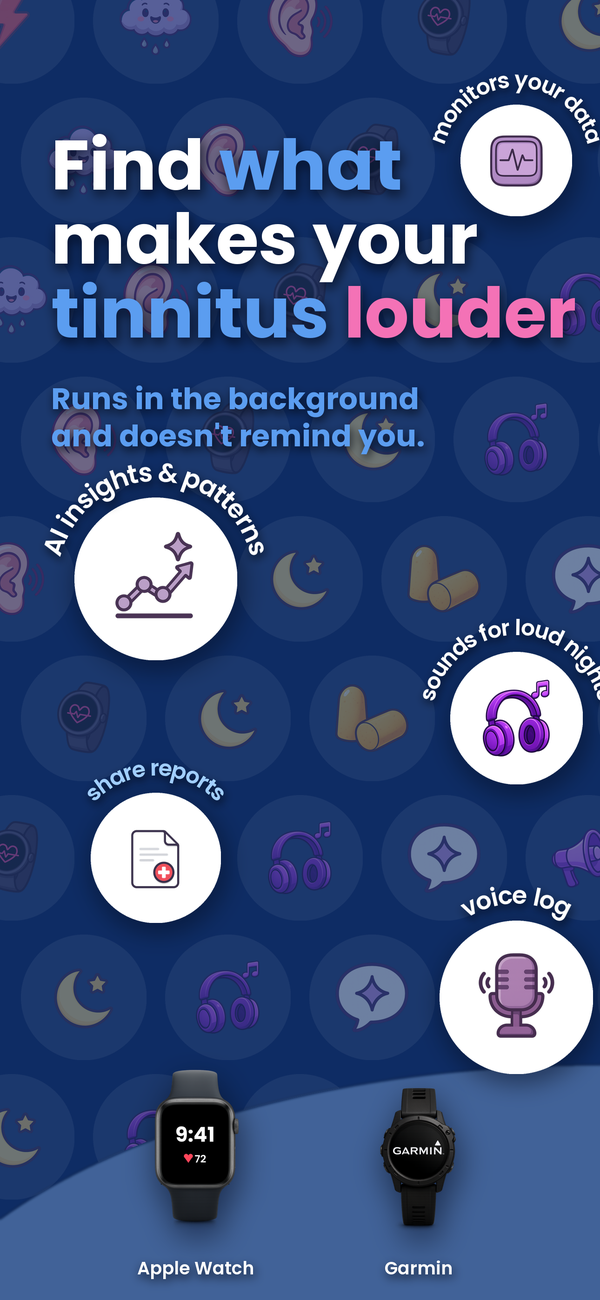
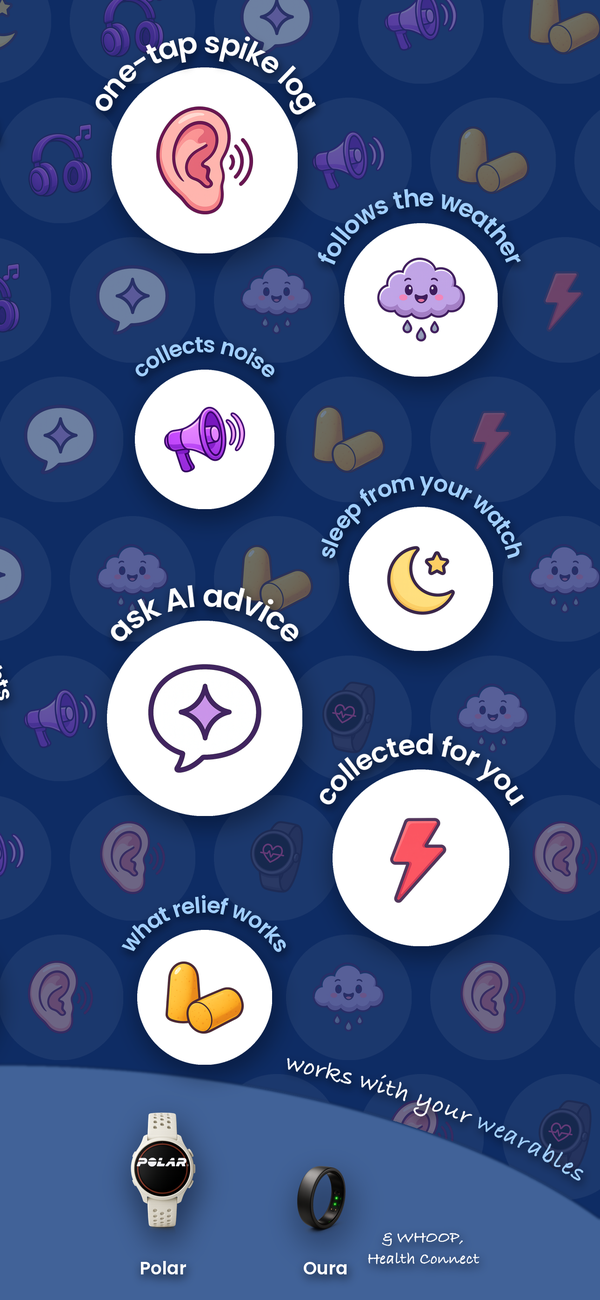
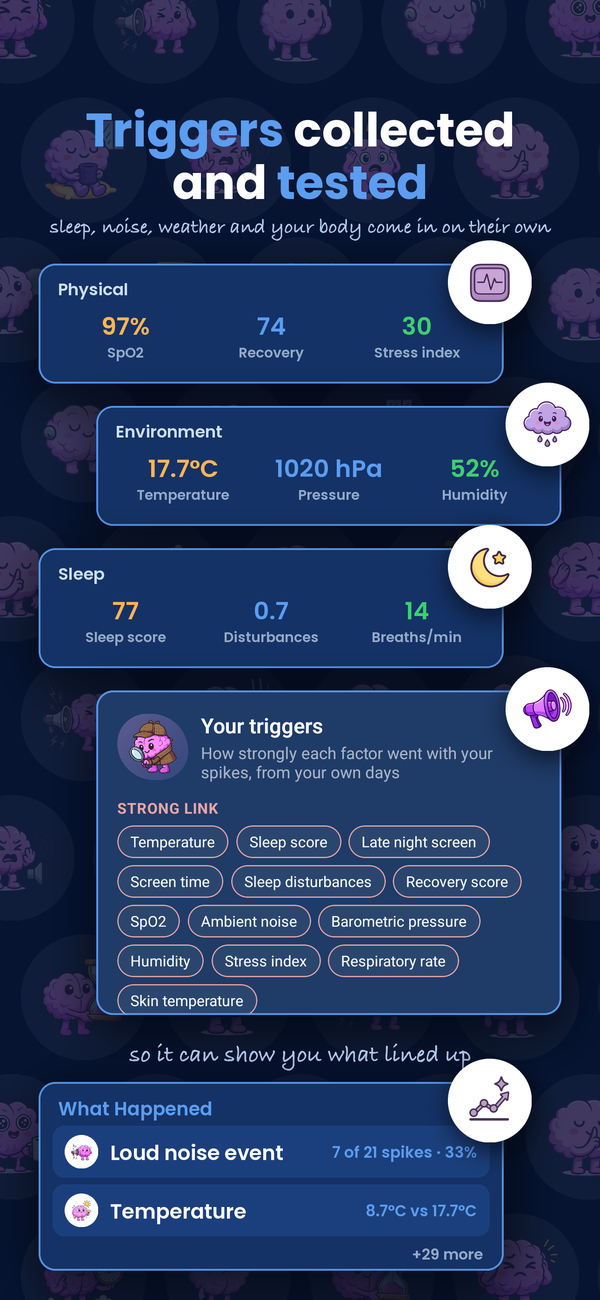
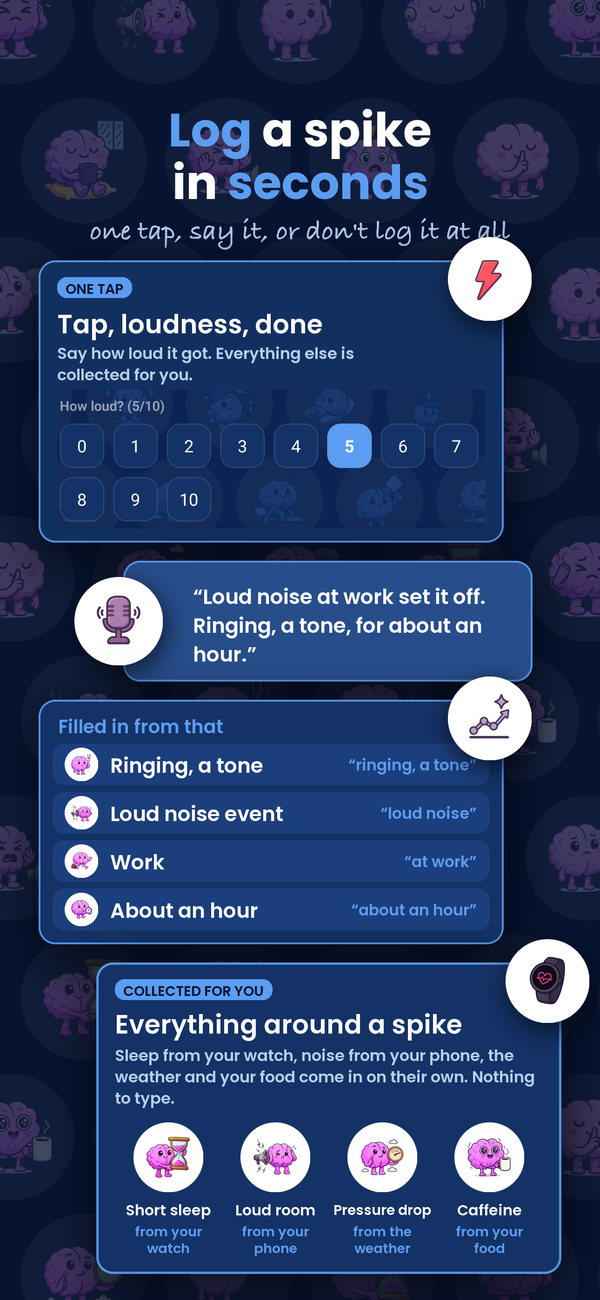
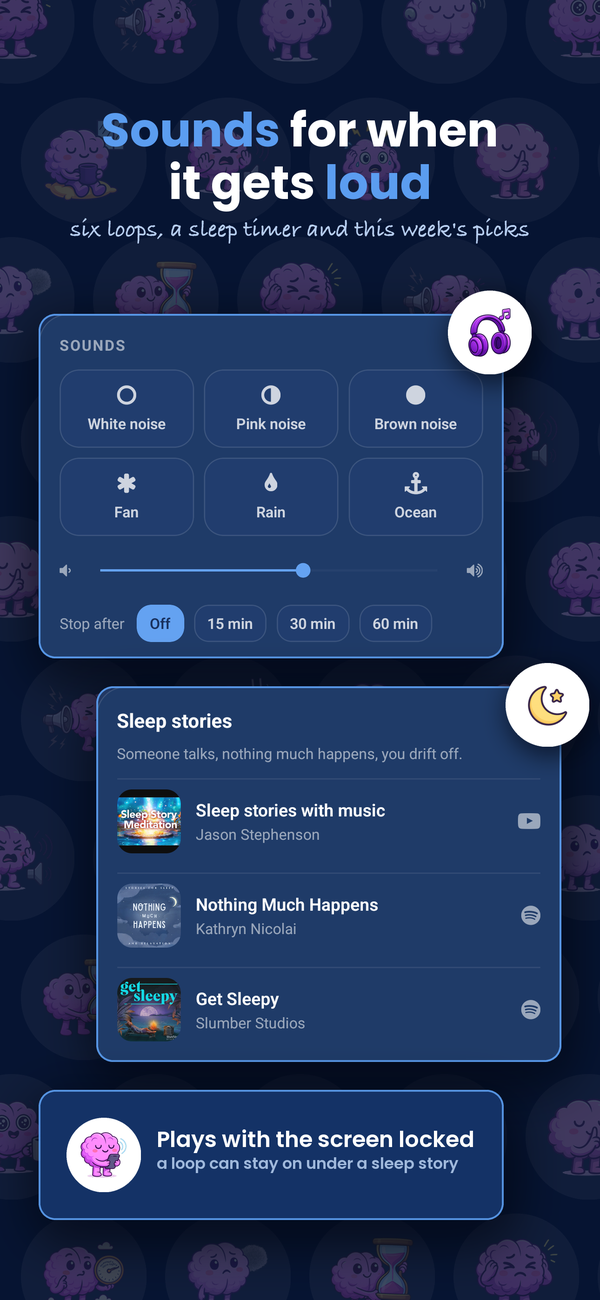
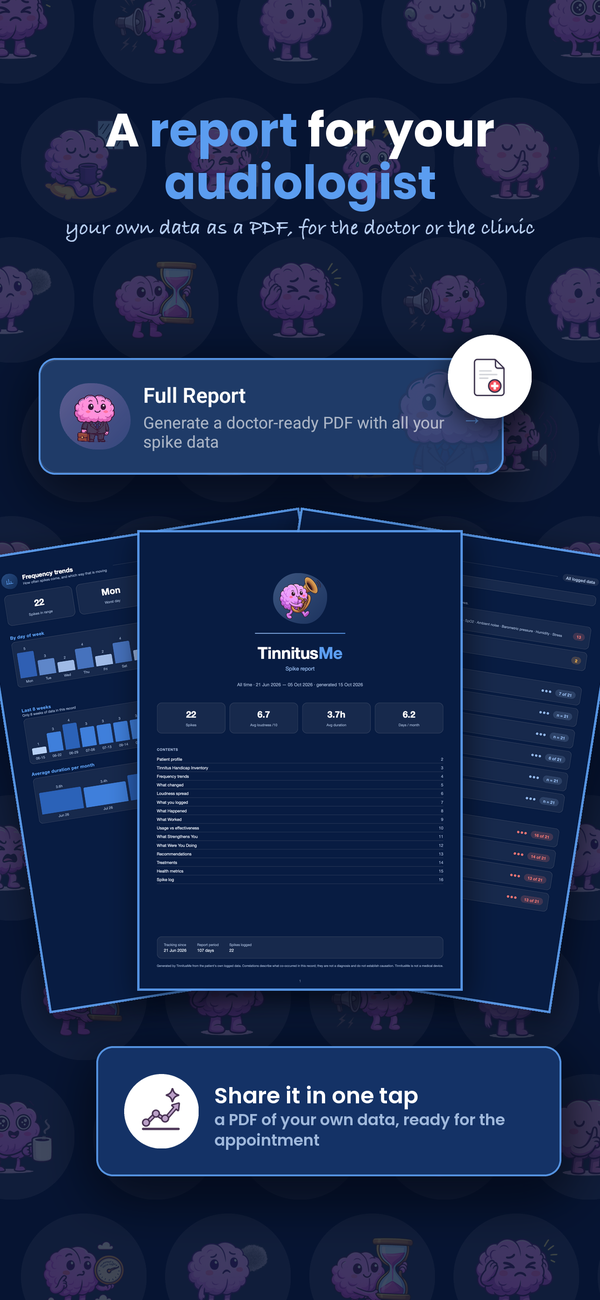
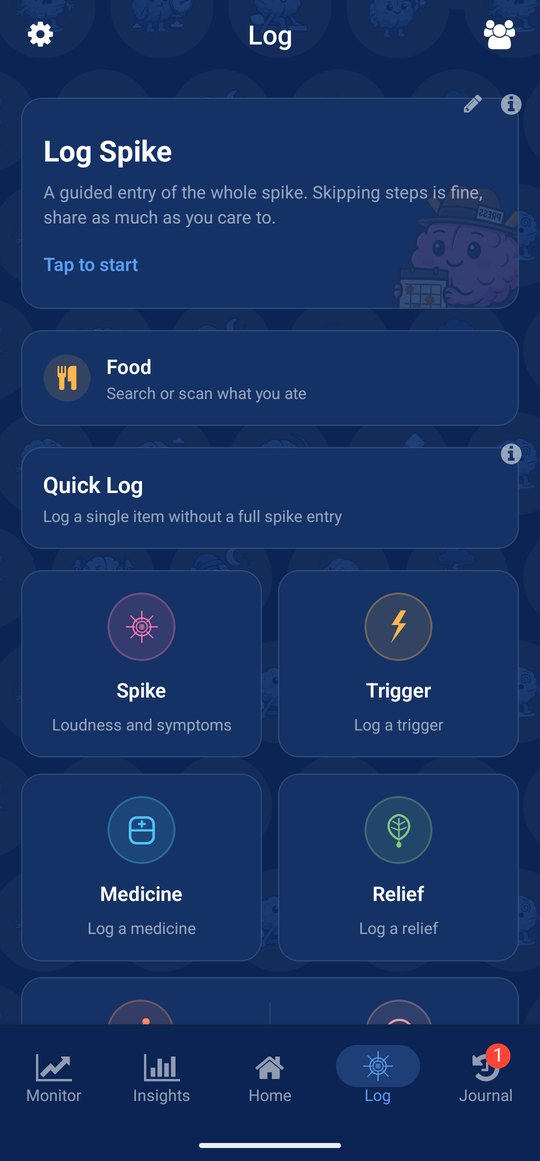
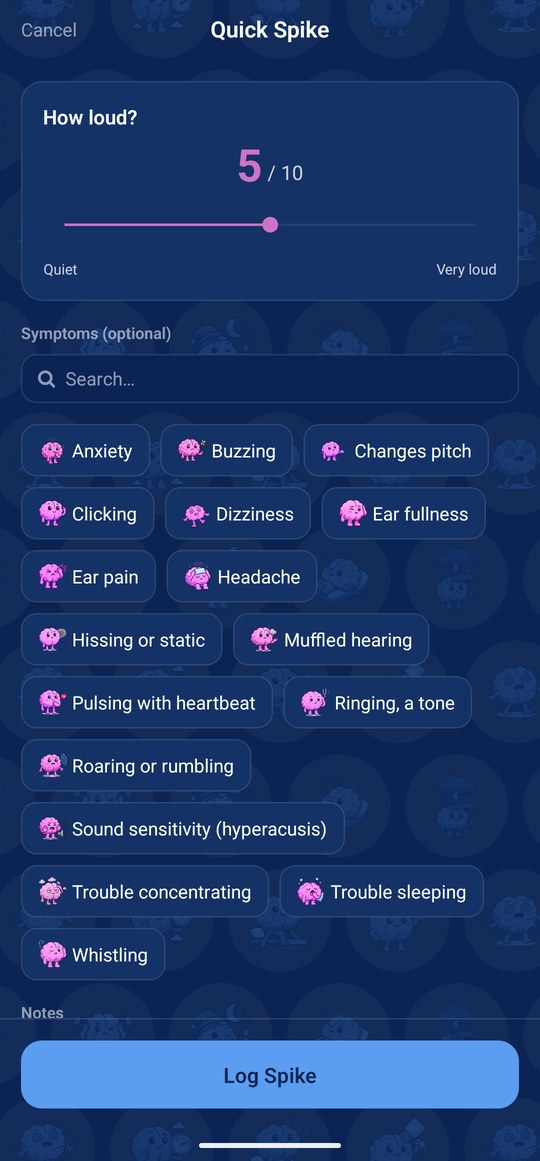
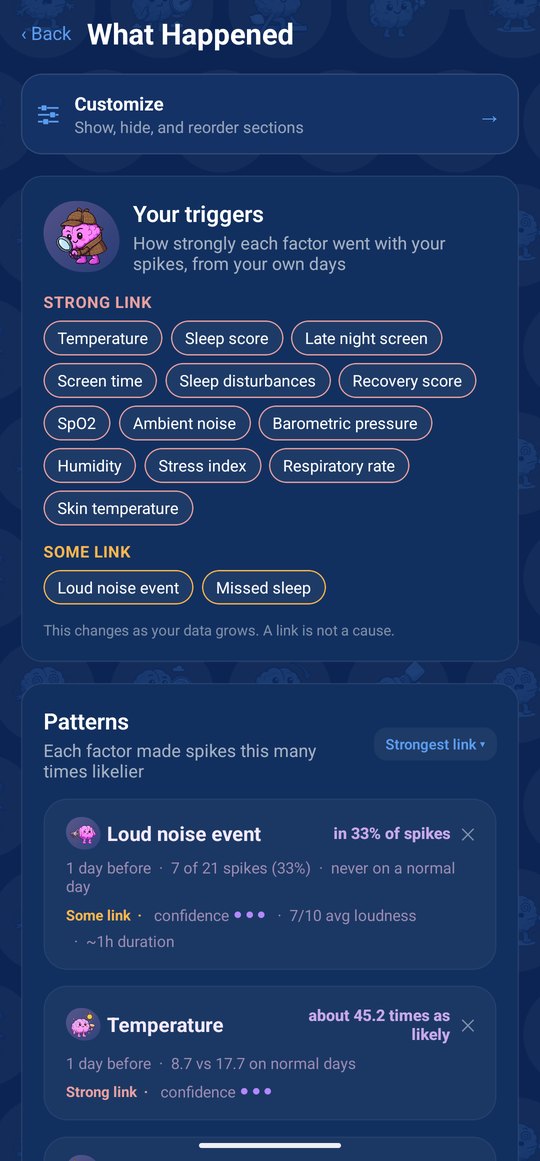
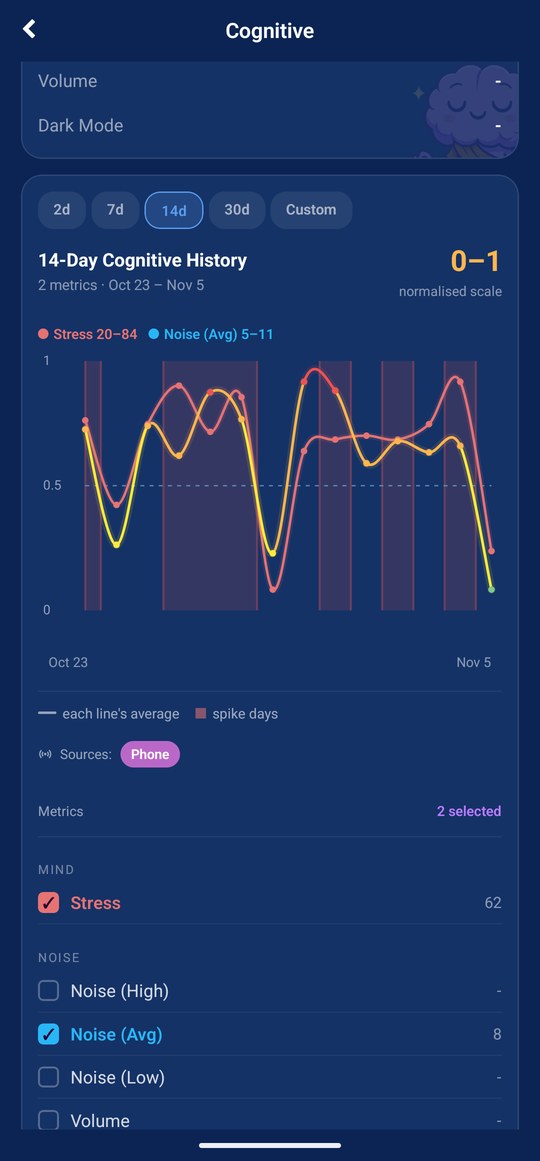
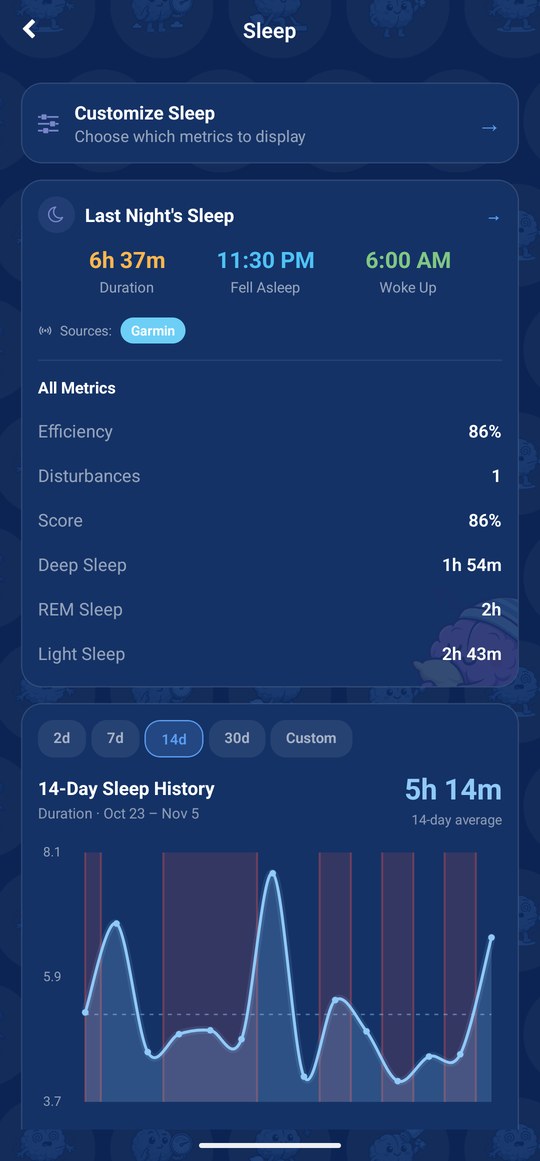
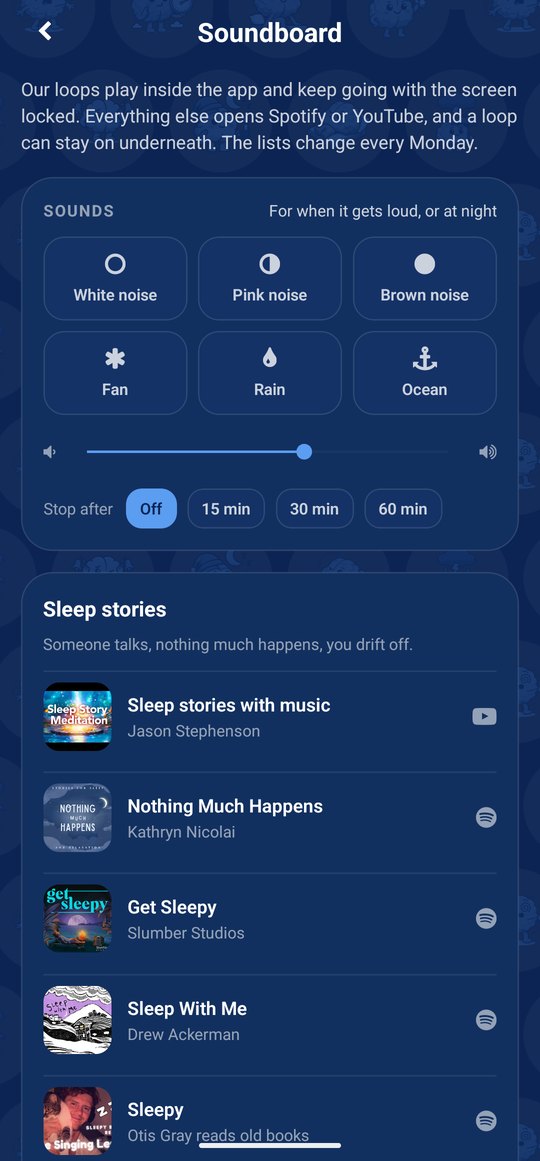
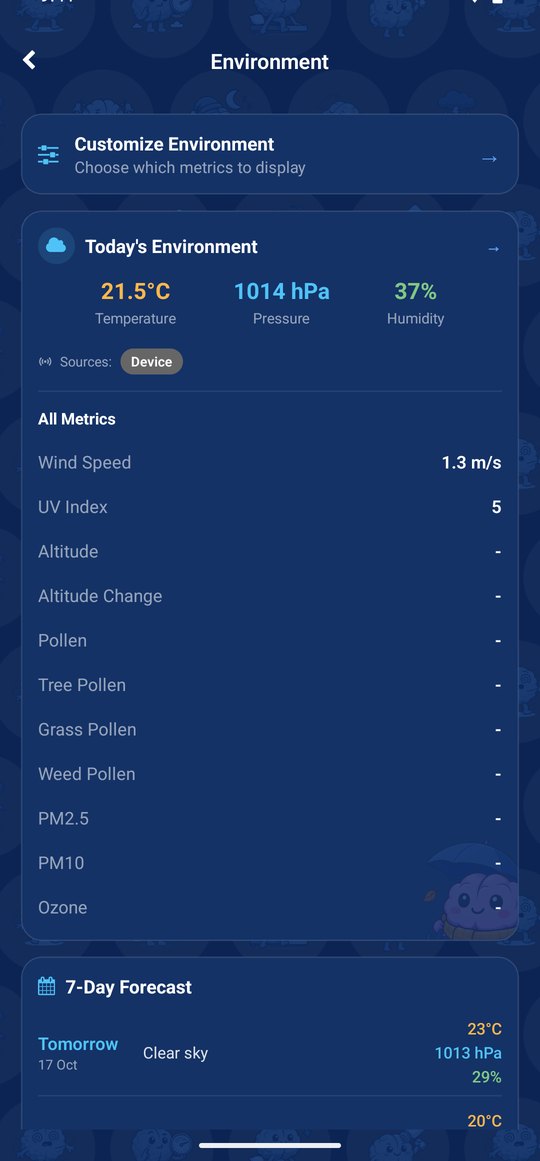
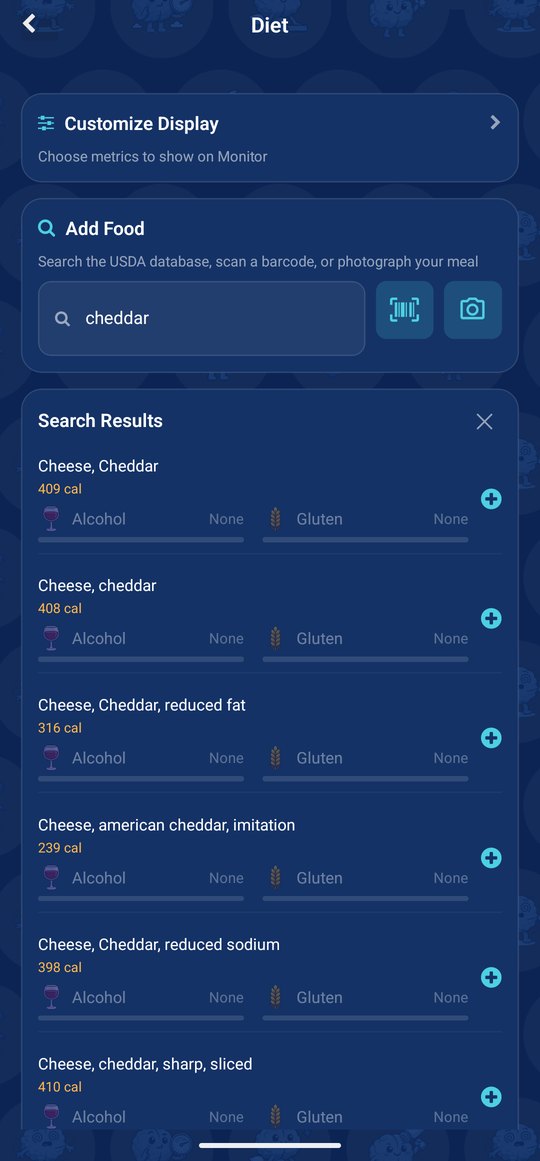
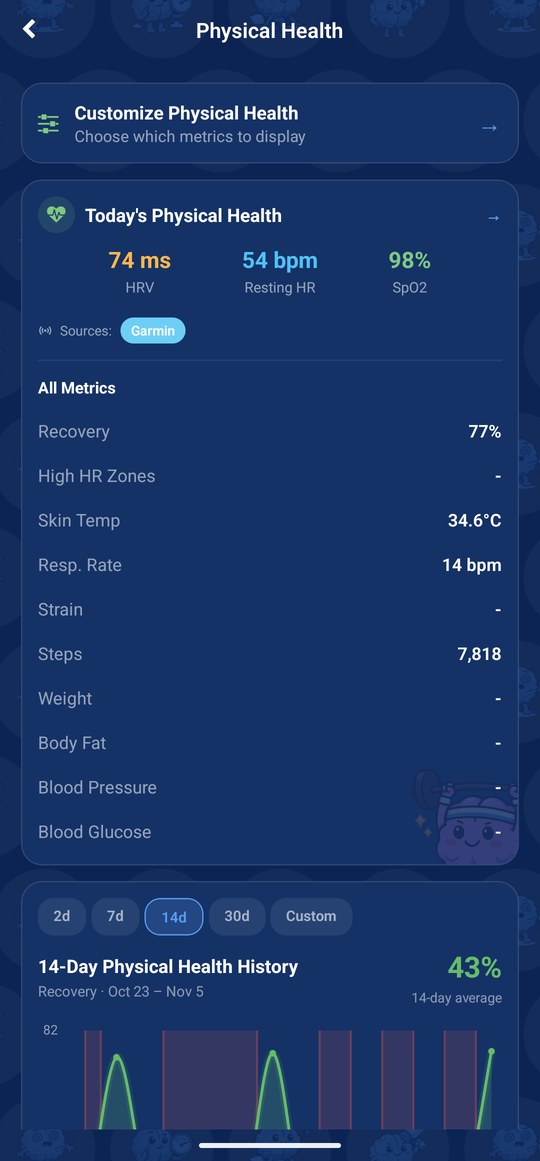
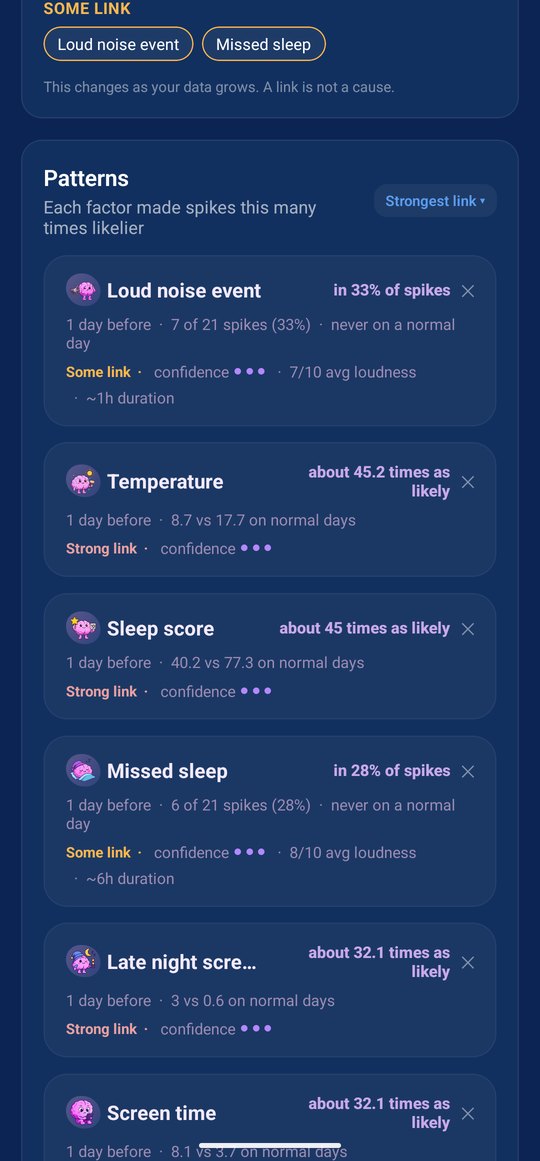
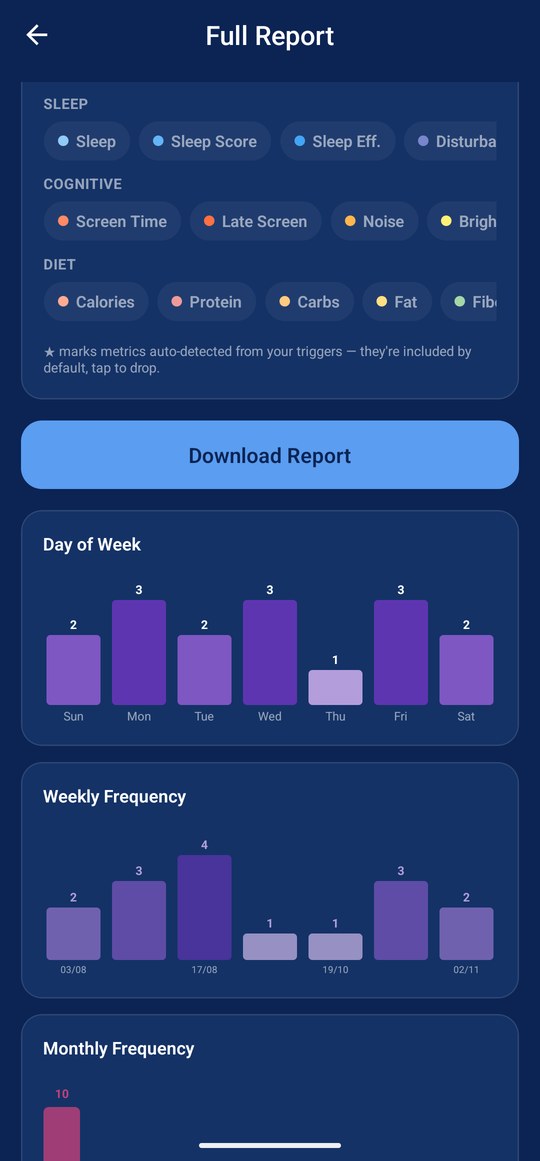
An app for iPhone and Android for people who live with tinnitus. You log a spike when it gets louder. TinnitusMe collects sleep, the noise around you, weather, food and your wearable's numbers on its own, compares your loud days with your quiet ones, and turns what it finds into a report for your audiologist. It also has sounds for loud moments and for the night.
Can an app help with tinnitus?
An app cannot cure tinnitus, and TinnitusMe does not claim to. What it can do is answer “what goes with my louder days?” from your own data instead of guesswork, give you sounds for when it gets loud, and put the pattern on paper for your audiologist, ENT or GP.
Is TinnitusMe free?
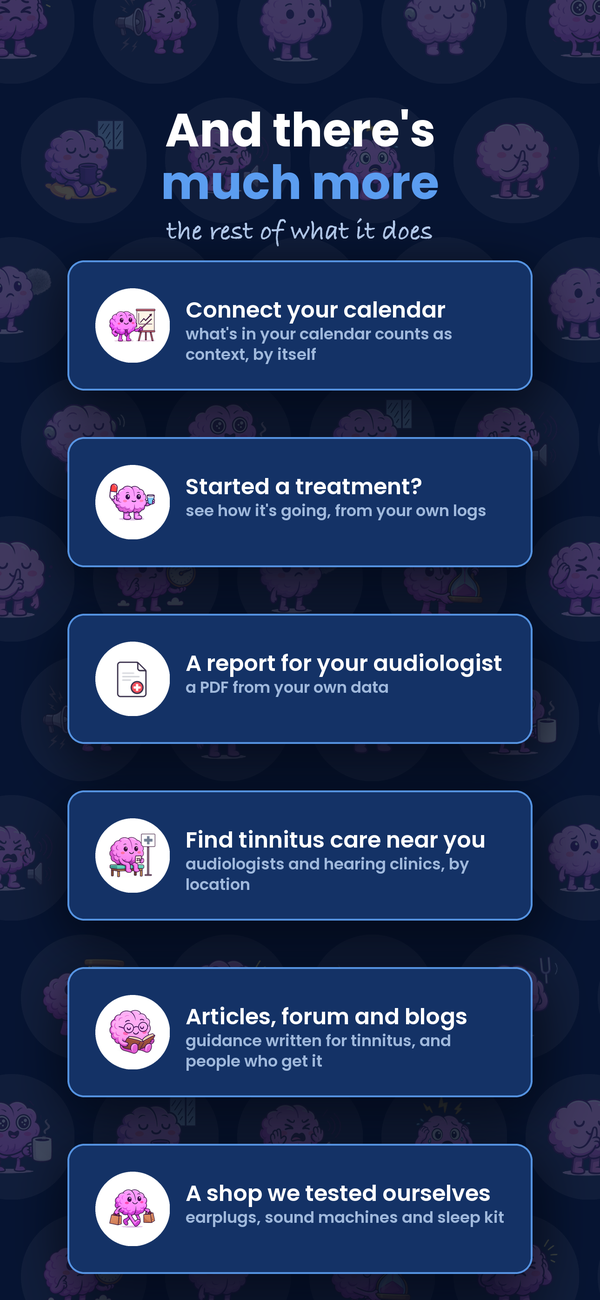
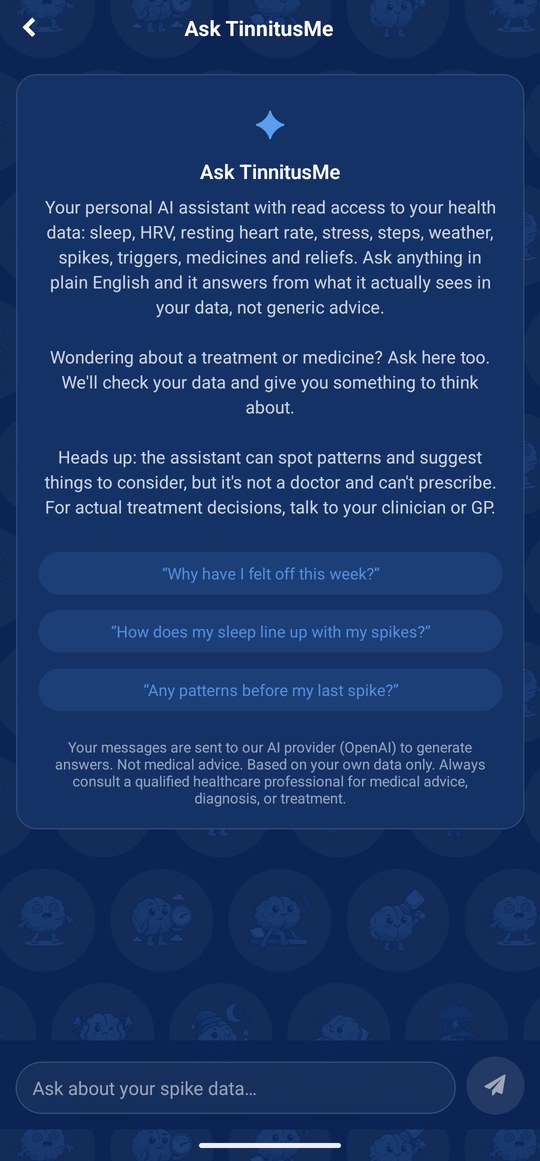
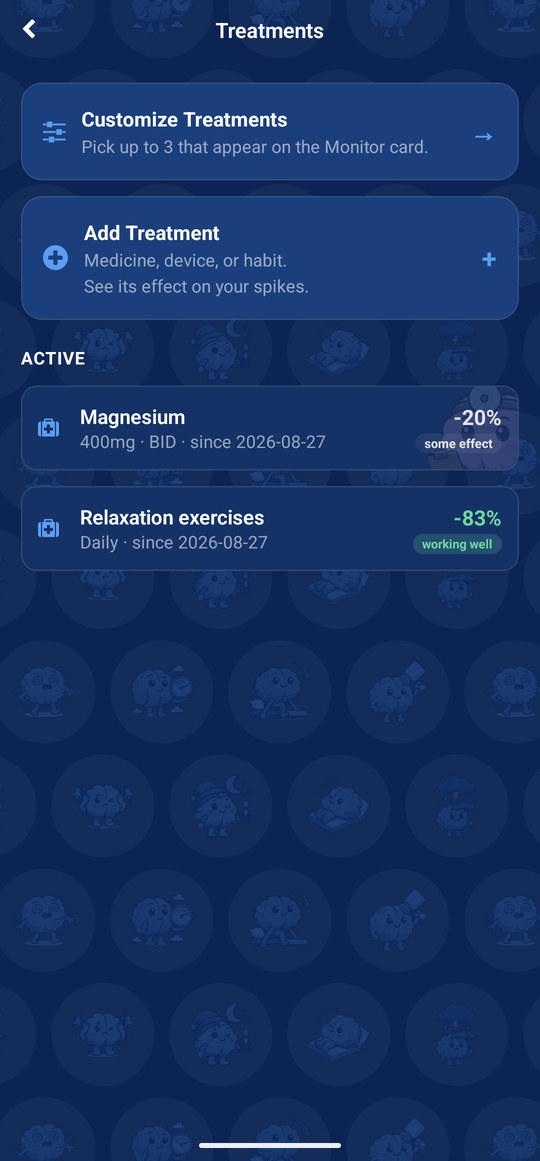
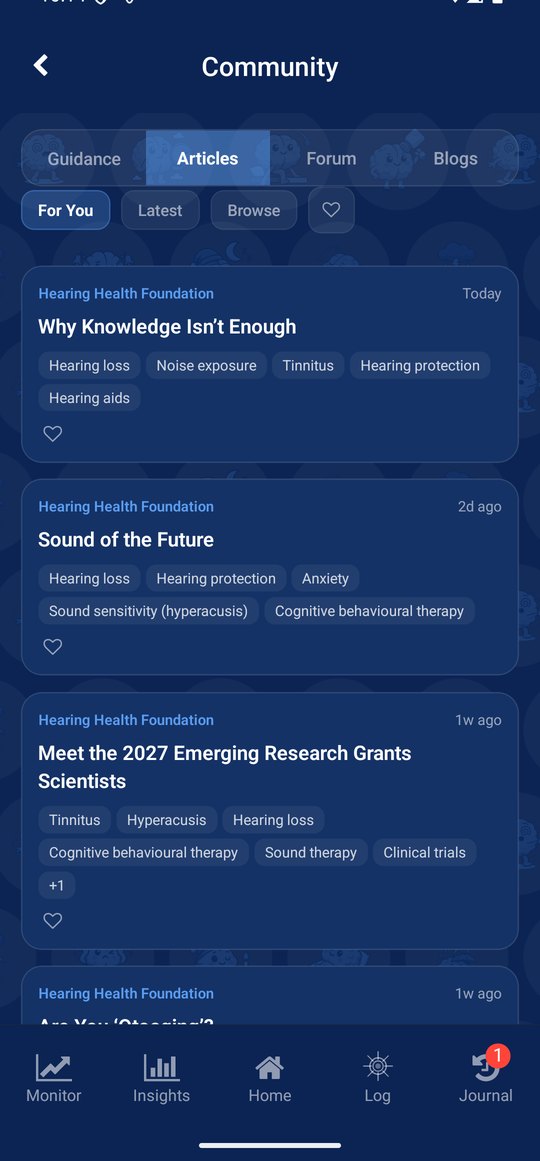
Logging spikes, the sounds and weekly picks, the background collection, the last 7 days of your Journal, the community and the nearby clinic list are free. Premium adds your full Journal, Insights, Ask TinnitusMe, the tests worth running, Flagged today, the Full Report and PDF, the THI, the Treatments page, history graphs, sharing with a practitioner and food logging: £7.99 a month or £54.99 a year. New accounts get 14 days of Premium free.
Will it keep asking me how my tinnitus is?
No. Paying attention to tinnitus tends to make it louder, so TinnitusMe never reminds you to listen, never asks whether it is still there, and has no daily check-in. Notifications are off unless you switch one on yourself.
Mine is always there. Or it comes and goes. Does that matter?
Both work. You answer that once during setup and it only changes the words the app uses.
Do I need a wearable?
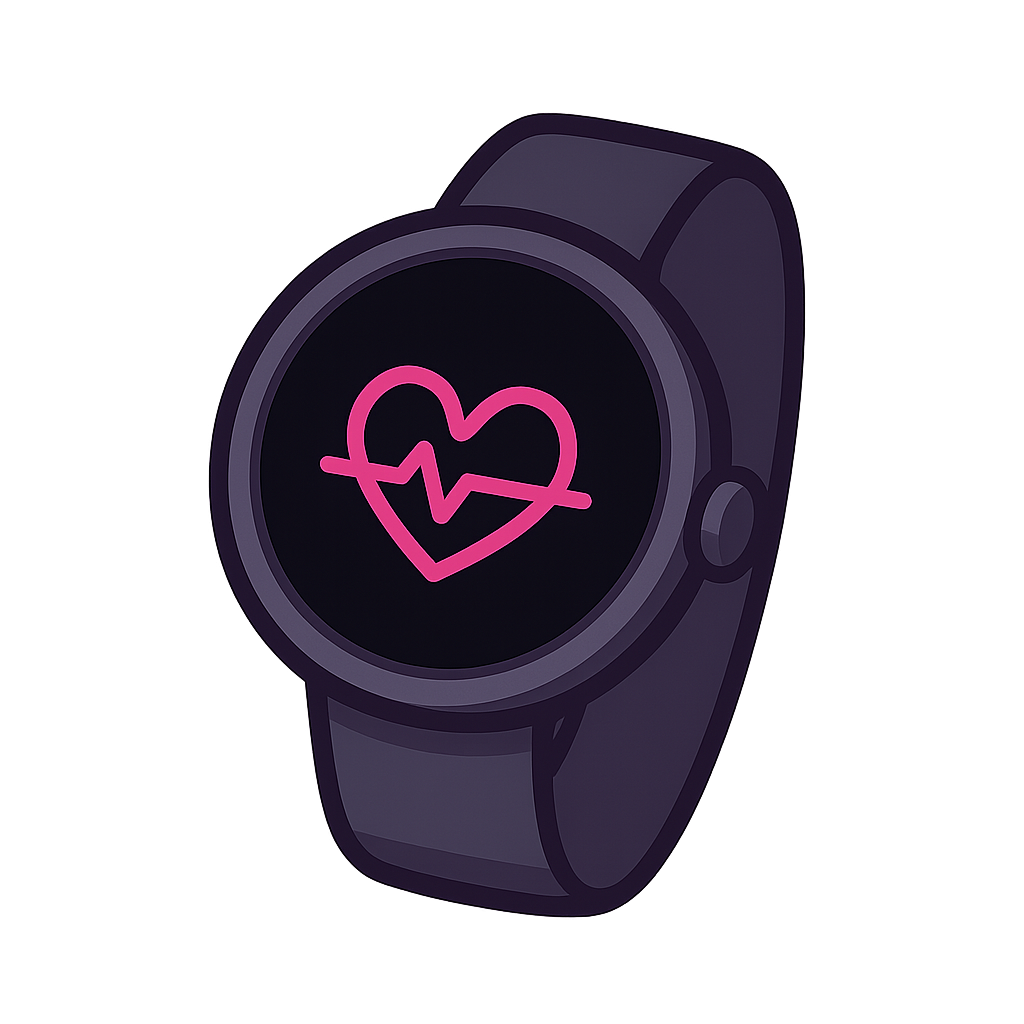
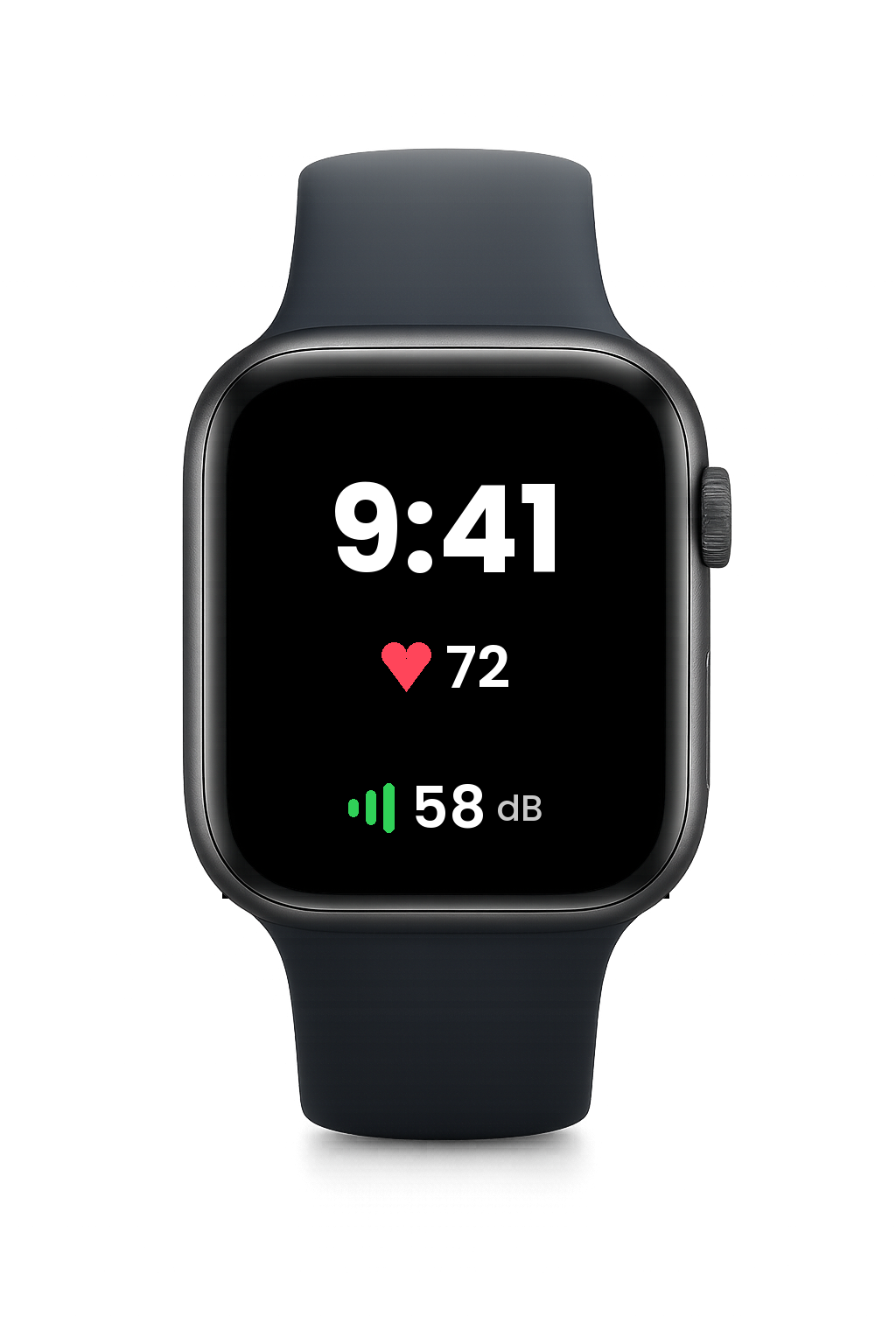
No. Weather comes from your location, your phone can measure how loud your surroundings are, and on Android it can read screen time and sleep timing. A wearable, Apple Health or Health Connect adds sleep stages, heart rate, HRV and stress. Garmin, Oura, Polar and WHOOP connect directly; Apple Watch comes in through Apple Health.
Does the app record sound?
It measures, it does not listen. When noise sampling is on, the phone reads the loudness around you for a minute and only that level is sent to your account. No audio is uploaded and nobody listens to anything.
Will it tell me to cut out caffeine?
No. There is no rule that fits everyone. TinnitusMe tests each factor against your own loud and quiet days and tells you whether it matters for you. If it does, it suggests a week worth testing, never a rule.
Is my health data private?
Yes. We don't sell your data and we don't share it with advertisers. All health data is encrypted at rest and in transit, and you can delete your account and your data at any time. A practitioner sees your data only after you agree, and only the parts you choose.
Is TinnitusMe a medical device?
No. It shows patterns in your own data to help you and your clinician; it does not diagnose or treat anything. New tinnitus in one ear, tinnitus that pulses with your heartbeat, or sudden hearing loss should be seen by a doctor or audiologist promptly.






 Log it
 Collected
 Compared
 Nothing to remember
 Bring it along